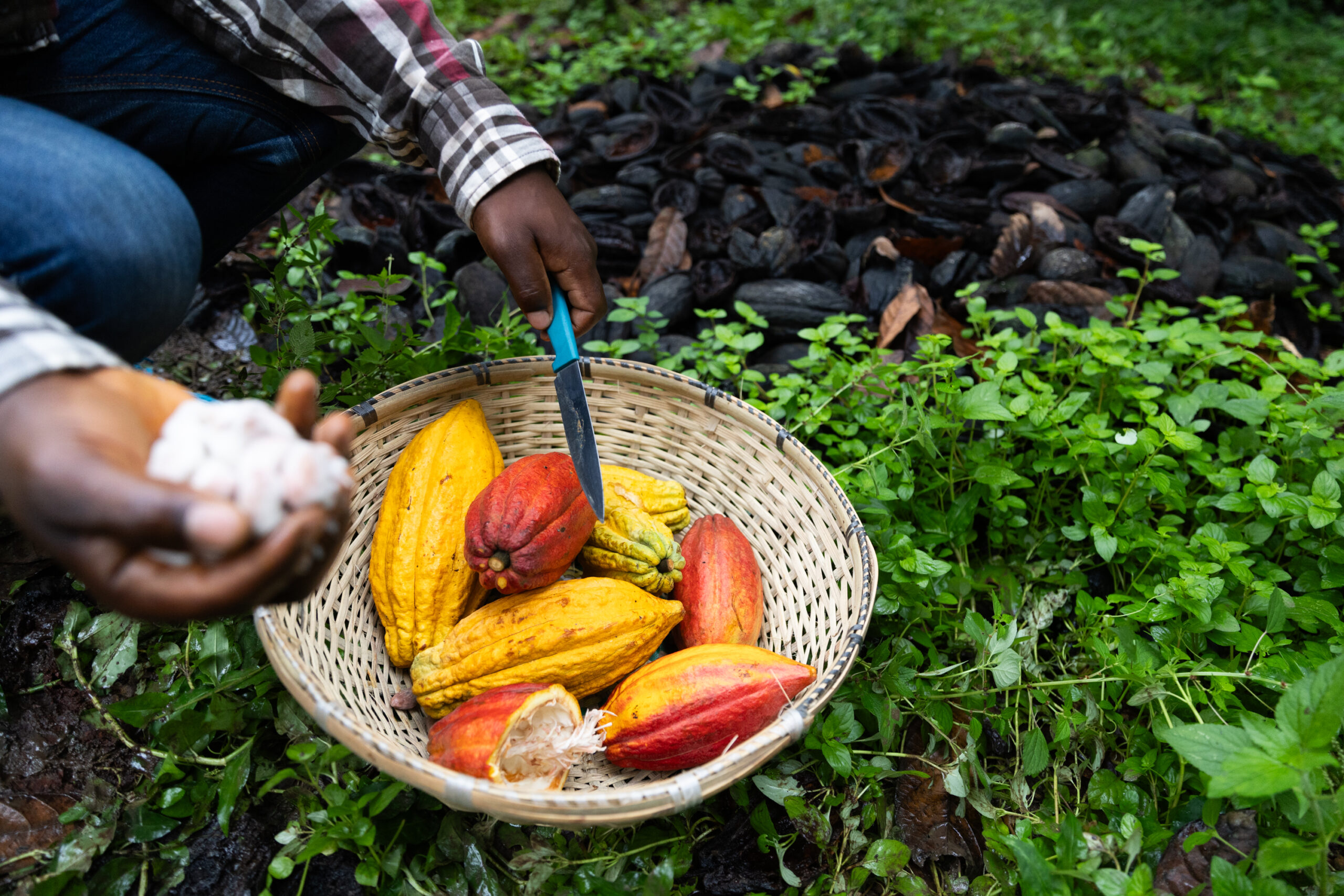
Farmer empowerment is a cornerstone of the ARS 1000 framework and represents one of its most transformative ambitions. Embedded particularly in ARS 1000 – 1, but reinforced throughout the entire series, this theme acknowledges that sustainability is not achievable without elevating the voices, capacities, and conditions of cocoa farmers—the very individuals at the foundation of the cocoa value chain. Empowerment in this context spans economic, social, and institutional dimensions, offering a rights based and inclusive vision of what it means for African cocoa producers to thrive in an increasingly complex global market.
Economically, ARS 1000 1 promotes empowerment through mechanisms that increase income, improve access to markets, and reduce vulnerability. The standard requires that farmers be paid a premium for sustainably produced cocoa. This premium paid over and above the standard market price is intended to reward farmers’ compliance with sustainability criteria and compensate for additional costs associated with responsible production practices. Importantly, the premium must be distributed transparently and fairly, whether to individual farmers or collectively through farmer groups or cooperatives. The availability of this additional income not only incentivizes good practices but also enhances farmers’ financial resilience.
The standard also emphasizes capacity building. It mandates that farmers and their organizations receive training in financial literacy, farm management, and accounting. This is critical because many smallholder farmers lack access to education and business services, limiting their ability to negotiate contracts, secure financing, or reinvest in their farms. Through sensitization programs, coaching, and continuous improvement plans, ARS 1000 1 helps farmers acquire the skills and knowledge they need to make informed decisions, plan for the future, and operate their farms as viable businesses.
Institutionally, farmer empowerment is strengthened through support for the formation and professionalization of Farmer Groups and Cooperatives. These entities serve as Recognized Entities under the standard, responsible for coordinating implementation, managing documentation, and interfacing with regulators and buyers. The standard requires that these groups have clearly defined leadership structures, policies on gender and youth inclusion, and transparent governance mechanisms. By organizing collectively, farmers can benefit from economies of scale, negotiate better prices, and access services and inputs that would otherwise be unaffordable to individuals.
Social empowerment is also explicitly addressed. ARS 1000 1 requires the adoption of human rights policies, including the prevention of child labour, forced labour, and discrimination. It mandates respect for workers’ rights, safe working conditions, and the promotion of gender equality. Women and youth often marginalized in the agricultural sector are to be actively included in decision making processes, leadership roles, and training opportunities. Child rights are safeguarded, with clear distinctions drawn between harmful child labour and acceptable light work that contributes to children’s development without undermining their education or wellbeing.
Perhaps most significantly, ARS 1000 1 seeks to empower farmers by giving them a stronger voice in the cocoa value chain. It recognizes them not as passive recipients of aid or regulation, but as central stakeholders in shaping the future of sustainable cocoa. By mandating consultation, participation, and feedback mechanisms, the standard ensures that farmer perspectives are integrated into policy and practice.
In conclusion, farmer empowerment under ARS 1000 is a holistic and actionable vision. It is about ensuring fair compensation, building skills, fostering organization, and protecting rights. In doing so, it lays the foundation for a cocoa sector that is not only sustainable but just one where African farmers are respected, resourced, and resilient.