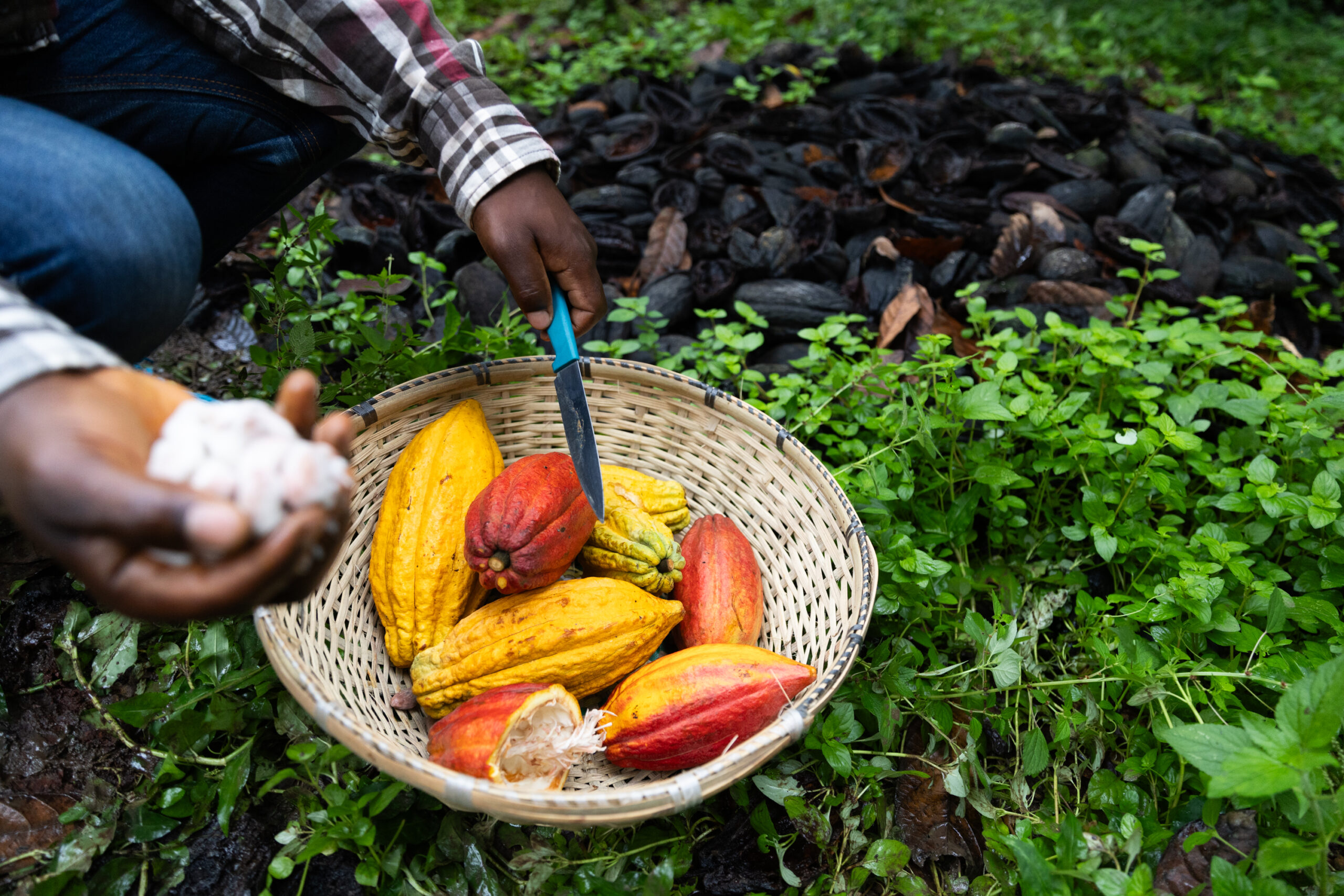
Sustainable farming lies at the core of the ARS 1000 framework and is foundational to transforming Africa’s cocoa sector into one that is resilient, inclusive, and environmentally responsible. ARS 1000 1 defines sustainability as a balanced integration of economic viability, environmental stewardship, and social responsibility. In practical terms, this means that cocoa production must be structured in a way that meets the current needs of farmers and consumers while safeguarding resources and ecosystems for future generations. The standard does not treat sustainability as an aspirational goal but as a structured, enforceable requirement rooted in continuous improvement and local ownership.
Under ARS 1000 1, farmers are required to prepare a Cocoa Farm Development Plan (CFDP), which serves as the operational blueprint for managing farms in a sustainable manner. The CFDP is a documented process that includes the diagnosis of existing farm conditions, identification of environmental risks, and specification of corrective measures. It guides farmers in the adoption of Good Agricultural Practices (GAPs), the rational use of fertilizers and agrochemicals, integrated pest management, and long term farm renewal strategies. Moreover, the plan must be revisited annually, allowing farmers and farmer groups to monitor progress and refine their strategies.
One of the most important environmental dimensions of ARS 1000 -1 is its strong emphasis on protecting ecosystems. The standard mandates that cocoa farms avoid encroachment on primary forests and protected areas, reinforcing national and international commitments to combat deforestation. Water bodies must also be protected from contamination through safe storage and disposal of agrochemicals. Waste management systems must be in place to ensure that non – biodegradable materials are not discarded irresponsibly. These provisions are crucial for conserving biodiversity and mitigating the effects of climate change, both of which have direct impacts on the long term productivity of cocoa farms.
In addition to environmental management, the standard also supports economic sustainability. Farmers are encouraged to diversify their income sources, reduce reliance on synthetic inputs, and increase productivity through better planning and training. It recognizes that environmental responsibility cannot be achieved without improving the economic resilience of producers. To this end, ARS 1000 1 supports access to financial services, coaching, and cooperative based resource mobilization. When farmers are equipped with the knowledge and tools to manage their farms efficiently, they are more likely to adopt sustainable practices voluntarily and consistently.
Furthermore, the standard promotes agroforestry as a viable model for sustainable cocoa production. By integrating cocoa with timber, shade trees, and other crops, farmers can optimize land use, enhance biodiversity, and improve microclimatic conditions. Agroforestry also provides additional income and food security, especially for smallholder farmers operating in ecologically sensitive regions.
Ultimately, the sustainable farming theme of ARS 1000 provides a practical roadmap for cocoa producers to transition from traditional methods toward practices that are climate smart, economically sound, and socially just. It reflects a forward looking vision of African agriculture one that values long term land productivity over short term gain, and one that empowers farmers to become stewards of the environment while improving their livelihoods.